Shopper Research
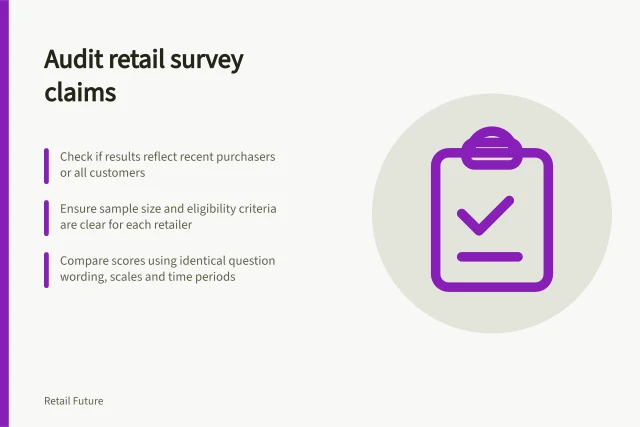
Checking the sample behind a retail satisfaction survey
Learn which sample, eligibility, response and question details matter before comparing published retail satisfaction scores.

Desk
Interprets shopper surveys, panel data and academic work, noting sample limits and what the findings can support.
Shopper Research
Learn which sample, eligibility, response and question details matter before comparing published retail satisfaction scores.
Shopper Research
Understand when shopper studies can compare convenience with price or value, and when question wording makes the figures incompatible.
Shopper Research
Compare passing movements, store entries and walk-in transactions before using foot traffic to judge an Australian retail site.
Shopper Research
Compare Australian grocery and discretionary demand using suitable category boundaries, purchase behaviour and matched evidence.
Shopper Research
Compare retail surveys and transaction data by their units, coverage and dates, then choose wording their relationship can support.
Shopper Research
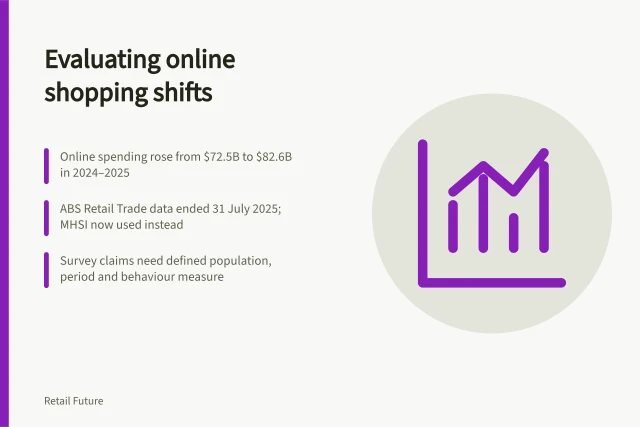
Check whether evidence shows a change in Australian shopping habits by matching behaviour, population, period and data coverage.
Shopper Research
“Customers are looking for value” is plausible in many periods but too broad to explain a buying decision. Ask what “value” means in the claim: lower upfront price …
Shopper Research
Read Australian shopper surveys and spending research with the right population, question, period and limitations before applying a finding.
Shopper Research
Compare retail service expectations across reports by matching questions, shopper groups and field dates before claiming a trend.
Shopper Research
Identify replenishment, replacement and occasion purchases, then measure retail purchase cycles without confusing seasonal sales with repeat buying.
Shopper Research
Explore when immediate access, product inspection, advice and a combined trip can make an Australian store visit useful.