Market Analysis
Part of Retail pricing behaviour
Comparing everyday pricing with frequent promotion models
An everyday-price model asks customers to trust a stable offer. A frequent-promotion model asks them to notice changing offers. Compare the two using the same …
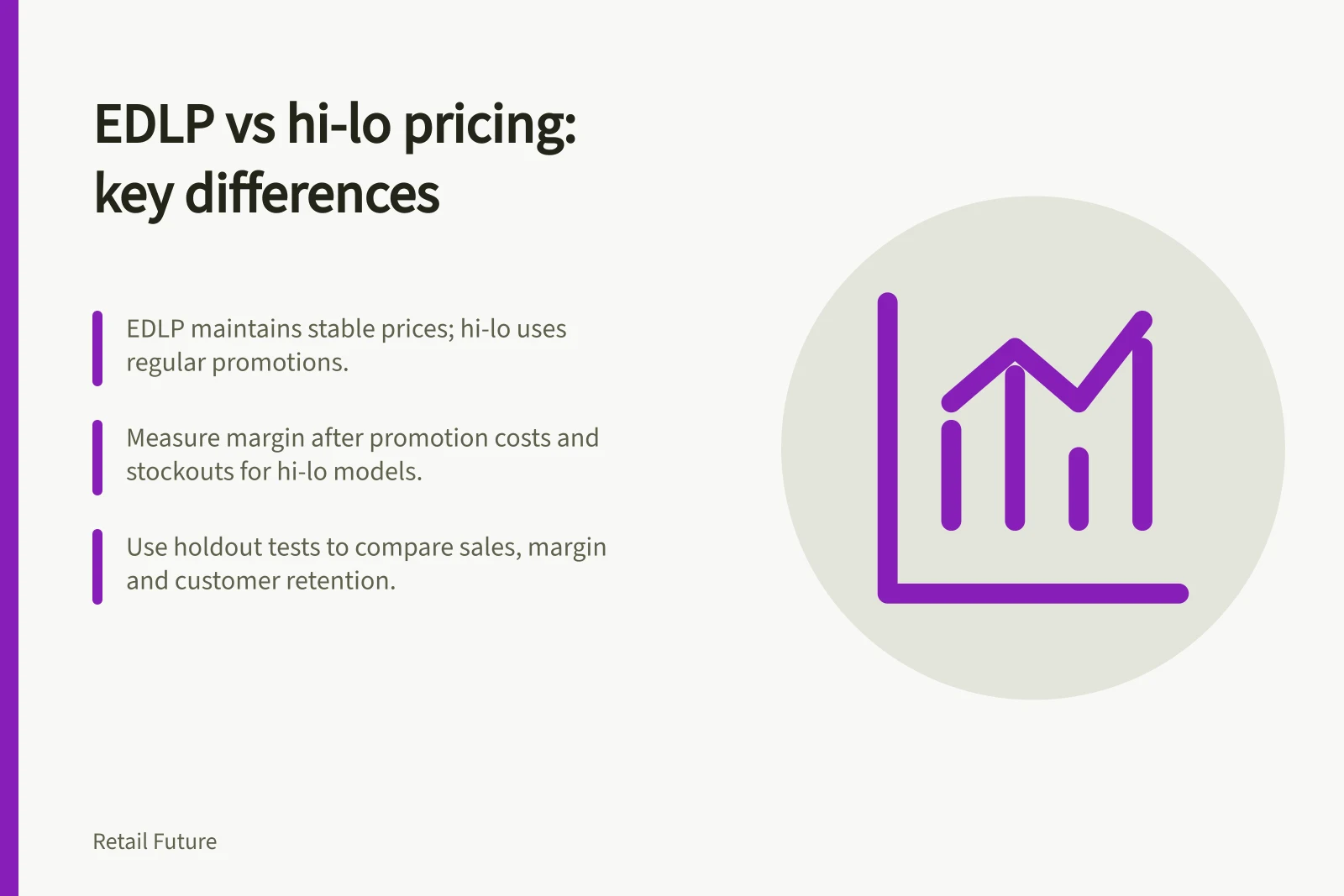
Everyday low pricing (EDLP) keeps the offer stable; frequent-promotion, or hi-lo, pricing alternates regular prices with temporary offers. Compare them using the same category, period and unit of sale, and test whether sales and margin are steady or concentrated around promotions.
For EDLP, track regular-price sales and gross margin after supplier funding. For hi-lo, separate regular-price and promotional sales, then measure margin after promotion costs, stockouts and repeat purchases after the offer ends. For both models, include purchases shifted from another item in the retailer’s range.
Baseline sales are the sales expected without promotional activity; incremental sales = total sales − baseline sales. This helps distinguish additional sales from purchases shifted into a sale week, when promotional-period sales rise but total demand over the comparison period may not.
Run a holdout test where practical, or compare comparable stores or periods; record stock availability and keep the category, period and unit consistent. Set the success measure in advance, such as contribution after promotion costs, customer retention or category growth, and assess the full test period rather than one busy sale day.
A promotion’s sales peak alone does not show whether hi-lo outperforms EDLP: check whether it adds category growth and contribution, or mainly changes purchase timing or shifts sales from another item. Compare both models on the same measures, including repeat purchase, margin and stockouts.
Show shoppers a clear final price and, for relevant groceries, the unit price. The ACCC provides guidance on price displays and enforces the Unit Pricing Code for groceries. For “was/now” comparisons, keep a record of the reference price and check that the display complies with applicable rules.
ACCC Guidance on Price Displays in Australia
- Mandatory Unit Pricing
- Required for groceries at point of sale
- “Was/Now” Price Display Rules
- Reference price must be valid and documented
- Consumer Rights Under Australian Consumer Law
- Clear final price display required; misleading pricing prohibited
- Supermarkets Inquiry 2024–25 Findings
- Promotions often drive short-term spikes but not long-term loyalty