Market Analysis
Part of Retail pricing behaviour
Analysing private-label pricing without assuming equal quality
An own-label item may be cheaper than a branded alternative, but the shelf-price gap is only the start of a useful comparison. Pack size, ingredients or materials …
An own-label item may be cheaper than a branded alternative, but the shelf-price gap is only the start of a useful comparison. Pack size, ingredients or materials, service life and intended use can differ. Compare products that solve the same customer task before calling one better value.
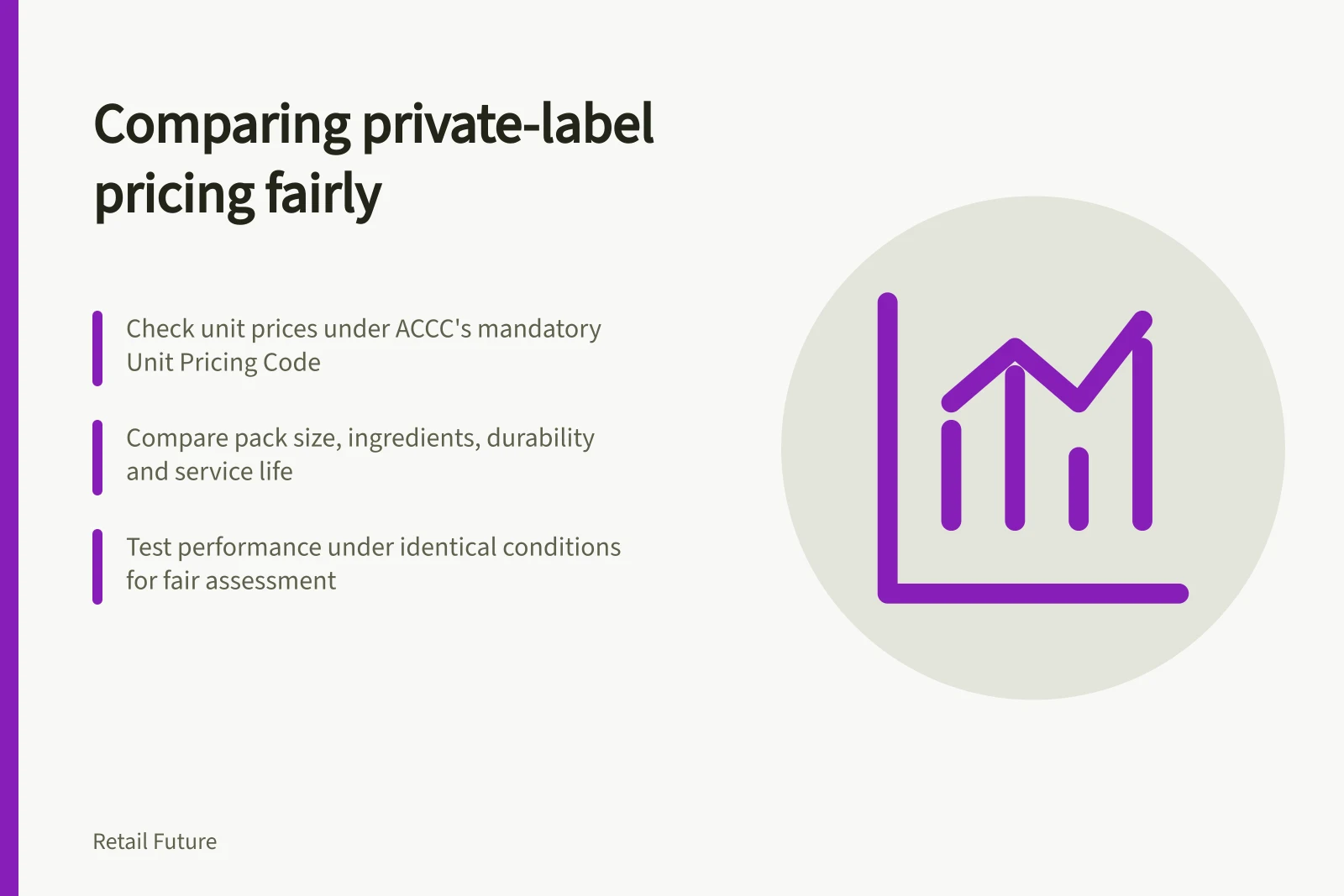
Start with the unit price where it is relevant. The ACCC enforces the Unit Pricing Code, a mandatory industry code, and accepts reports about unit pricing. Then check the specification: quantity, concentration, ingredients, durability, and any included service or guarantee. A lower unit price for an unsuitable product is not a saving for the customer.
For a retail range review, add returns, complaints and repeat purchases over a meaningful period. Separate a new item’s trial effect from sustained satisfaction. If performance matters, define a fair test method and use the same conditions for both products.
Do not state that own-label and branded goods are made to identical standards unless that has been verified for the products in question.
The ACCC educates businesses and consumers about their rights and obligations under the consumer guarantees. It does not provide legal advice about what consumers are entitled to or what businesses need to do in a particular situation, and it does not resolve individual disputes about whether the consumer guarantees have been met or the remedy. A comparison should not assume that two differently priced products must perform identically.
Present the comparison honestly: “lower unit price, smaller ingredient list and shorter stated warranty” tells shoppers more than “same quality for less”.
Private-label vs Branded Grocery Items: Key Differences Beyond Price
- Unit Price
- Lower for private-label (ACCC Unit Pricing Code)
- Pack Size
- Varies; not always equivalent between brands
- Ingredients/Concentration
- May differ; check labels for quality and quantity
- Service Life/Durability
- Not guaranteed to be the same; depends on product type
- Warranty/Guarantee
- Shorter or absent in some private-label items
- Consumer Guarantees
- Same under Australian Consumer Law, but enforcement varies
How to Fairly Compare Private-Label and Branded Products
- Check unit price (per kg, L, etc.)Mandatory under ACCC Unit Pricing Code
- Compare pack size and net weightEnsure equivalent quantities
- Review ingredients and concentrationLook for differences in quality or additives
- Assess durability and warranty termsNot always equal even if prices differ