Shopper Research
Part of Retail category research
Comparing grocery shopping with discretionary retail demand
Compare Australian grocery and discretionary demand using suitable category boundaries, purchase behaviour and matched evidence.
Compare grocery and discretionary demand by defining the purchases first. Then ask how readily customers can change their timing, quantity or choice. Food is bought repeatedly, but that does not make every supermarket item essential.
Set the comparison boundary
In the ABS Monthly Household Spending Indicator, spending is categorised to COICOP divisions, with outputs from 9 COICOPs published. Supermarket turnover and food spending are not the same thing: a supermarket trip can include products outside food, such as cosmetics, pet food or alcohol. Food products can be bought from other kinds of business.
A broad discretionary spending total can include services as well as goods, so it is wider than discretionary retail goods. For a clothing or furniture decision, compare the relevant product category with food rather than treating a broad discretionary total as store sales.
| Question | Grocery purchases | Discretionary goods purchases |
|---|---|---|
| Need | Which products are replenished and which extras can change? | Is the purchase planned, replaceable or deferrable? |
| Timing | Did trip frequency or basket contents change? | Did shoppers buy now, wait or bring a purchase forward? |
| Choice | Did pack, brand, quantity or store change? | Did specification, price tier or category change? |
| Evidence | Defined Food spending and suitable basket records | Defined product spending, units and availability |
Some grocery purchases can be delayed and some clothing purchases cannot. Apply the questions to a particular product and customer.
Look behind the dollars
A household may continue buying food while changing brands, quantities or meal choices. A fall in Food spending alone does not show that people skipped purchases: prices, quantities and mix can all affect current-price spending. A rise in clothing spending likewise does not establish that more garments were bought.
For a retailer decision, compare matching periods of units, transactions, basket mix and availability. Record promotions and selling days. A pause in sales may reflect a delayed purchase, missing stock or a price change; the sales total cannot choose among those explanations.
Read an Australian result narrowly
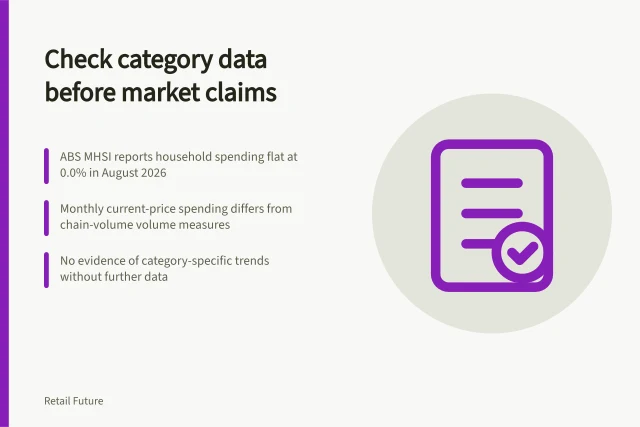
In the ABS August 2026 release, total household spending was flat at 0.0% month-on-month on a current price, seasonally adjusted basis. It rose 6.8% compared with August 2025. The indicator publishes outputs from 9 COICOPs, so a grocery or discretionary question is better matched to the relevant product series than to the total.
Australian Household Spending Trends (August 2026)
- 0.0%Total Household Spending (MoM)
- 6.8%Total Household Spending (YoY)
- 9COICOP Categories Published