Market Analysis
Part of Retail sustainability claims
Comparing measurable retail actions with marketing language
Distinguish a retailer's documented action, measured outcome and future promise from the wider impression of its marketing language.
Compare a retailer’s marketing phrase with the action it names, the result it measures and the claim a shopper is likely to take from it. A specific action can be real while the headline suggests a wider benefit than the evidence shows. Put both statements at the same scope before judging them.
Put the phrase into a testable form
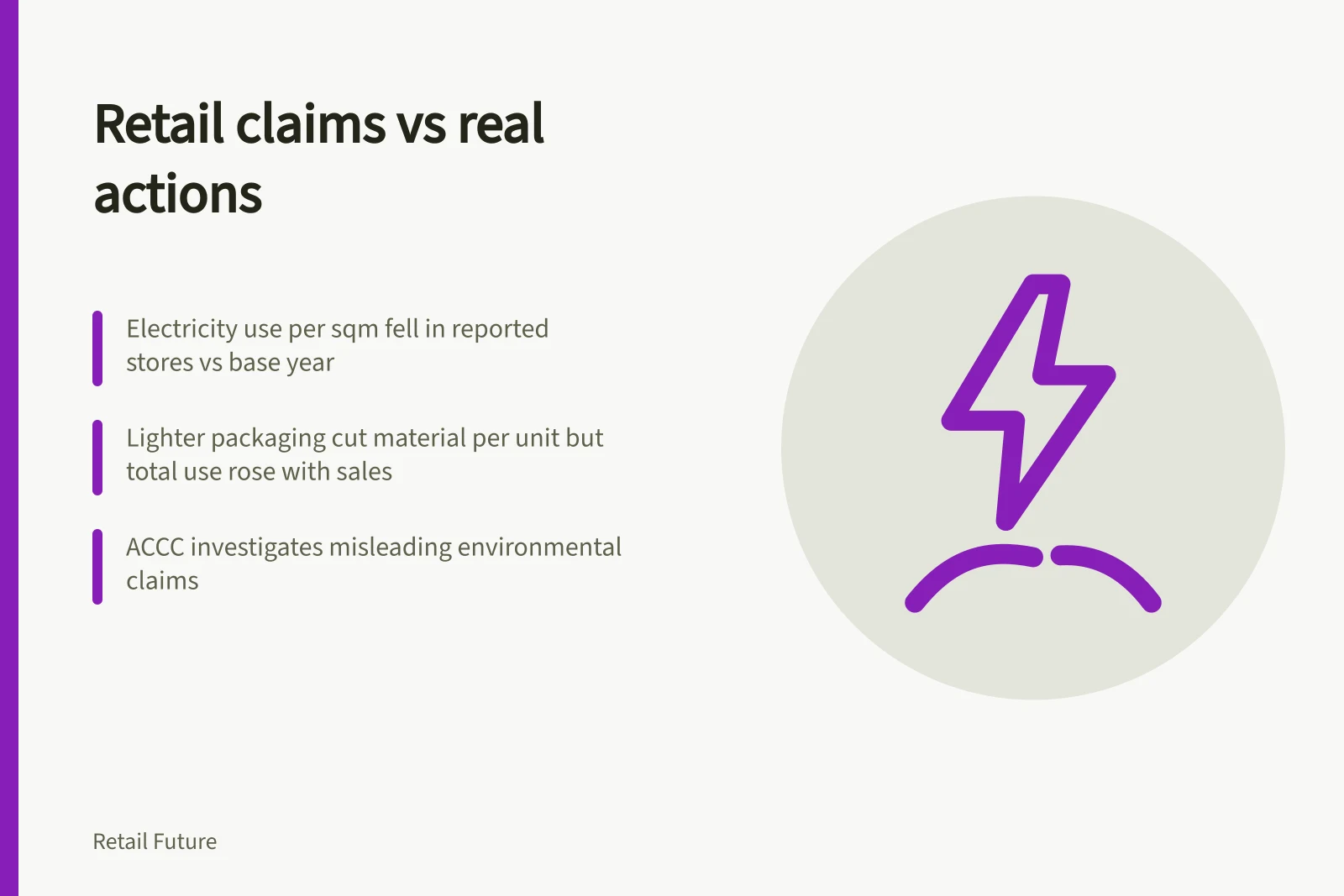
A useful record has four parts: object, change, comparison and period. “Greener stores” names none of them. “Electricity use per square metre fell at the stores included in this report compared with the stated base year” would be testable if the retailer published the figures, store boundary and method. It would still describe electricity intensity at those stores, not the environmental impact of everything they sell.
Pay attention to verbs: “Introduced” establishes a change in practice, while “reduced” requires a measured before-and-after result. “Committed to” describes a future intention; “achieved” requires evidence the stated result occurred. Do not move between verbs because a campaign places them together.
| Language in a claim | Ask for a measurable counterpart |
|---|---|
| “We use less” | Less of what, in total or per unit, against which period? |
| “Our range is sustainable” | Which products, attributes and environmental effects are covered? |
| “We are on track” | Which milestone was due, what was measured, and how was the target boundary set? |
| “Customers can recycle it” | Which packaging components and available collection routes are meant? |
Measurable Retail Actions vs. Marketing Language: A Critical Comparison
- Marketing ClaimWe use less
- Testable CounterpartElectricity use per square metre fell at the stores included in this report compared with the stated base year
- Marketing ClaimOur range is sustainable
- Testable CounterpartWhich products, attributes and environmental effects are covered?
- Marketing ClaimCustomers can recycle it
- Testable CounterpartWhich packaging components and available collection routes are meant?
Key Elements of a Testable Retail Claim
- Object
- Electricity use per square metre
- Change
- Fell
- Comparison
- Compared with the stated base year
- Period
- Report period includes data from selected stores over one year
Verbs in Marketing Claims: What They Really Mean
- Pros (Indicates Evidence or Action)Introduced – establishes a change in practice; Reduced – requires measured before-and-after result; Achieved – requires evidence of outcome
- Cons (Lacks Evidence or Implies Future Outcome)Committed to – describes future intention; On track – requires milestone tracking and progress reporting
Separate activity from outcome
An action record may state that a retailer changed packaging specifications, trained staff or installed equipment. For an outcome claim, look for the quantity affected and an observation after the change. A lighter pack may cut material per unit while total packaging use rises if more units are sold. Both can be true; the headline should say which was measured.
Evidence from selected stores can support a statement about those stores. Before treating a trial as a network result, check how many locations were included, whether they were typical and whether later reporting used the same measure. A target for a later year is different: it calls for grounds, a plan and progress reporting, not an assumption that the outcome has arrived.
Check what the customer would understand
The ACCC accepts reports of false or misleading environmental claims and can investigate businesses over environmental or sustainability claims.
State the strongest conclusion the documents support. If they show only a new carton for one product line, describe that action. If they show comparable material quantities before and after, report the measured change with its denominator. If method or coverage is missing, leave the environmental outcome open.
How to Evaluate a Retail Sustainability Claim
- Was the action documented?Yes – e.g., new carton for one product line
- Is the outcome measurable?Yes – if material quantities are compared before and after
- Are method and coverage disclosed?No – if missing, leave environmental outcome open
- Does the claim match the evidence?Only if all four elements (object, change, comparison, period) are clear